Anatomy & Physiology: An Integrative Approach uniquely blends anatomical details with physiological principles‚ maximizing comprehension through interconnected system coverage․
This textbook‚ available as a PDF ebook‚ emphasizes the interdependence of bodily systems‚ weaving prior knowledge into explanations of functional mechanisms․
Students gain access to affordable digital resources‚ including instant downloads and permanent access‚ enhancing their learning experience with this valuable study aid․
Overview of the Textbook
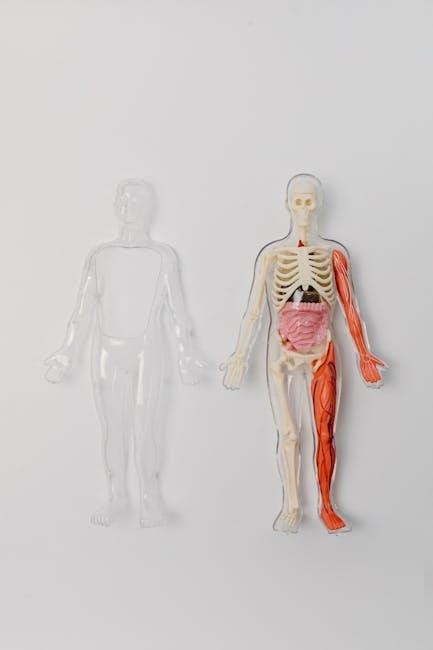
Anatomy & Physiology: An Integrative Approach presents a comprehensive exploration of the human body‚ meticulously designed for optimal learning․ The textbook distinguishes itself by seamlessly integrating anatomy and physiology within each chapter‚ rather than treating them as separate disciplines․ This approach highlights the crucial interdependence of body systems‚ fostering a deeper understanding of how structures enable functions․
Available in a convenient PDF format‚ the book utilizes carefully crafted figures accompanied by concise textual explanations‚ directly supporting the narrative․ “Integrate: Learning Strategy” boxes offer everyday analogies and practical advice‚ aiding in material retention․ The text aims to make complex concepts accessible‚ providing students with a robust foundation in both anatomical structure and physiological processes․ It’s a valuable resource for mastering the intricacies of the human body․
Authors and Key Contributors (McKinley‚ O’Loughlin‚ Bidle)
Anatomy & Physiology: An Integrative Approach is brought to life through the collaborative expertise of Michael McKinley‚ Valerie O’Loughlin‚ and Theresa Bidle․ These authors have meticulously crafted a textbook designed to maximize student comprehension of the human body’s complexities․ Their combined backgrounds in anatomy‚ physiology‚ and education ensure a balanced and insightful presentation of the subject matter․
The authors’ commitment to an integrated approach is evident throughout the PDF version of the text‚ where anatomical structures are consistently linked to their corresponding physiological functions․ They prioritize clarity and accessibility‚ utilizing everyday analogies and practical learning strategies․ Their work provides a solid foundation for students pursuing careers in healthcare and related fields‚ offering a comprehensive and engaging learning experience․
Target Audience and Course Level
Anatomy & Physiology: An Integrative Approach‚ readily available as a PDF ebook‚ is primarily designed for undergraduate students enrolled in introductory anatomy and physiology courses․ This includes students in nursing‚ allied health professions‚ and biology programs․ The textbook’s scope and depth make it suitable for both one-semester and two-semester A&P sequences․
The content is presented at a level that assumes a basic understanding of high school biology and chemistry‚ but it’s structured to be accessible even for students with limited prior science coursework․ The authors employ a pedagogical approach that emphasizes clinical relevance and practical application‚ preparing students for future studies and professional practice․ “Integrate: Learning Strategy” boxes further aid comprehension and retention․
Fundamental Concepts in Anatomy
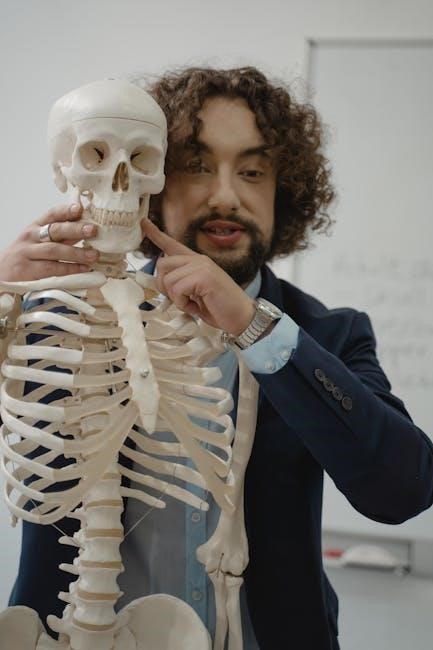
Anatomy & Physiology: An Integrative Approach’s PDF version meticulously explores structural levels‚ anatomical terminology‚ and body cavities‚ forming a foundational understanding․
Levels of Structural Organization
Anatomy & Physiology: An Integrative Approach‚ readily available as a PDF resource‚ systematically examines the hierarchical levels structuring the human body․ This begins with chemical components – atoms and molecules – essential for life’s processes․ These build into cellular levels‚ the basic structural and functional units․
Cells then combine to form tissues‚ groups performing specific functions‚ like epithelial or connective tissues․ Organs are constructed from different tissue types working collaboratively‚ such as the heart or stomach․ Finally‚ organ systems integrate organs to accomplish complex tasks‚ like digestion or circulation․
Understanding this organization‚ detailed within the PDF‚ is crucial for comprehending how the body functions as a cohesive‚ integrated whole‚ and how disruptions at one level impact others․
Anatomical Terminology (Directional Terms‚ Body Planes)
Anatomy & Physiology: An Integrative Approach‚ accessible in PDF format‚ emphasizes a standardized anatomical language for precise communication․ This begins with directional terms – superior/inferior‚ anterior/posterior‚ medial/lateral – defining relative positions of body structures․ These terms eliminate ambiguity when describing anatomical relationships․
The text also details body planes: sagittal (dividing left/right)‚ frontal (dividing anterior/posterior)‚ and transverse (dividing superior/inferior)․ Understanding these planes is vital for interpreting anatomical images‚ like those found within the PDF version of the textbook․
Mastering this terminology‚ thoroughly explained in the PDF‚ provides a foundational framework for accurately describing and visualizing the human body’s complex anatomy․
Body Cavities and Membranes
Anatomy & Physiology: An Integrative Approach‚ readily available as a PDF resource‚ meticulously explores the body’s organizational structure‚ focusing on body cavities and their protective membranes․ These cavities – dorsal (cranial & vertebral) and ventral (thoracic & abdominopelvic) – compartmentalize organs‚ offering protection and allowing for specific functions․
The PDF details the serous membranes lining these cavities (pleura‚ pericardium‚ peritoneum)‚ reducing friction and supporting organ movement․ Understanding these membranes is crucial for comprehending disease processes and clinical applications․
This section‚ within the comprehensive PDF textbook‚ emphasizes how cavity structure directly relates to organ function‚ providing a holistic understanding of anatomical organization․
Fundamental Concepts in Physiology
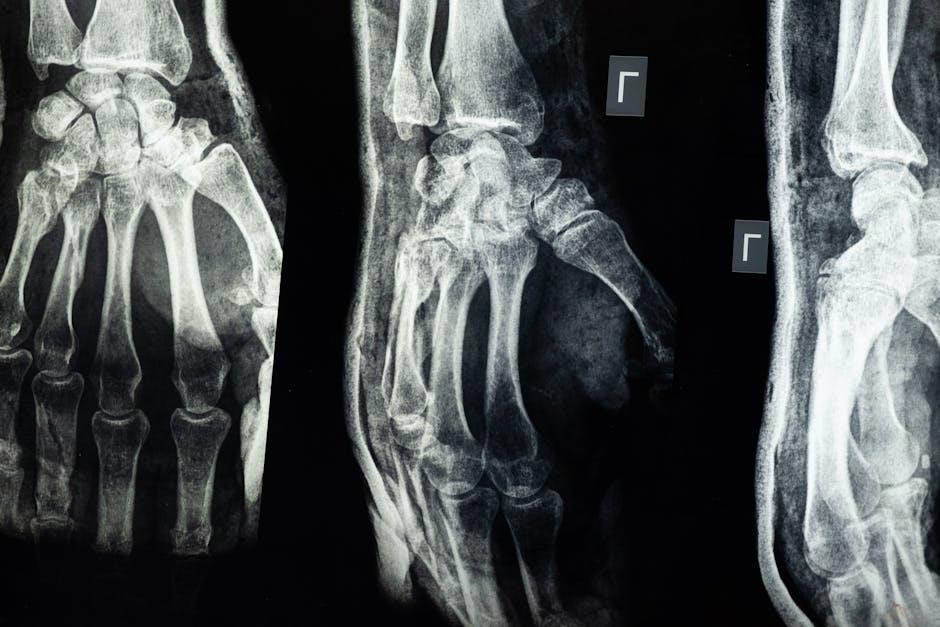
Anatomy & Physiology: An Integrative Approach’s PDF version delves into core physiological principles‚ like homeostasis and feedback‚ essential for bodily function understanding․
Homeostasis and Feedback Mechanisms
Anatomy & Physiology: An Integrative Approach‚ readily available as a PDF resource‚ meticulously explores the critical concept of homeostasis – the body’s ability to maintain a stable internal environment despite external changes․
This textbook details how the body employs intricate feedback mechanisms‚ both negative and positive‚ to regulate vital parameters like temperature‚ blood glucose‚ and blood pressure․ Negative feedback loops are highlighted as the primary means of maintaining stability‚ counteracting deviations from set points․
The PDF edition provides clear explanations and illustrative examples demonstrating how disruptions to these mechanisms can lead to disease․ Students will gain a comprehensive understanding of how various organ systems collaborate to achieve and preserve homeostatic balance‚ a cornerstone of physiological function․
Cellular Physiology (Transport‚ Metabolism)
Anatomy & Physiology: An Integrative Approach‚ accessible in PDF format‚ delves into the fundamental processes occurring within cells – the basic units of life․ This includes a detailed examination of cellular transport mechanisms‚ encompassing passive diffusion‚ facilitated diffusion‚ and active transport‚ explaining how substances move across cell membranes․
The textbook thoroughly covers cellular metabolism‚ outlining key metabolic pathways like glycolysis‚ the Krebs cycle‚ and oxidative phosphorylation‚ and their roles in energy production (ATP synthesis)․
Students benefit from clear explanations of how these processes are interconnected and essential for maintaining cellular function and overall organismal health․ The PDF version offers comprehensive diagrams and illustrations to aid in understanding these complex biochemical processes․
Tissue Types and Their Functions
Anatomy & Physiology: An Integrative Approach‚ conveniently available as a PDF ebook‚ provides a comprehensive overview of the four primary tissue types: epithelial‚ connective‚ muscle‚ and nervous tissue․ Each tissue type is meticulously examined‚ detailing its unique structure and specific functions within the body․
The text explores epithelial tissues’ roles in covering surfaces and forming glands‚ connective tissues’ support and connection functions‚ muscle tissues’ capacity for contraction‚ and nervous tissues’ role in communication and control․
The PDF resource utilizes detailed illustrations and clinical examples to demonstrate how these tissues integrate to form organs and contribute to overall physiological processes‚ enhancing student comprehension of their vital roles․

Body Systems: An Integrative Approach
Anatomy & Physiology: An Integrative Approach‚ in PDF format‚ explores each body system‚ emphasizing their interconnectedness and collaborative functions for optimal physiological performance․
The Integumentary System
Anatomy & Physiology: An Integrative Approach‚ readily available as a PDF resource‚ comprehensively covers the integumentary system – the body’s protective outer layer․ This system‚ encompassing skin‚ hair‚ and nails‚ is explored in detail‚ highlighting its crucial roles beyond simple protection․
The textbook elucidates the skin’s functions in temperature regulation‚ sensory reception‚ vitamin D synthesis‚ and immune defense․ It details the layers of the epidermis and dermis‚ alongside associated structures like sweat and sebaceous glands․
Furthermore‚ the PDF version emphasizes the system’s integration with others‚ such as the nervous system for sensation and the immune system for defense against pathogens․ Learning is enhanced through detailed illustrations and explanations of clinical correlations‚ providing a holistic understanding of the integumentary system’s vital contributions to overall health and homeostasis․
Skeletal System: Bone Structure and Function
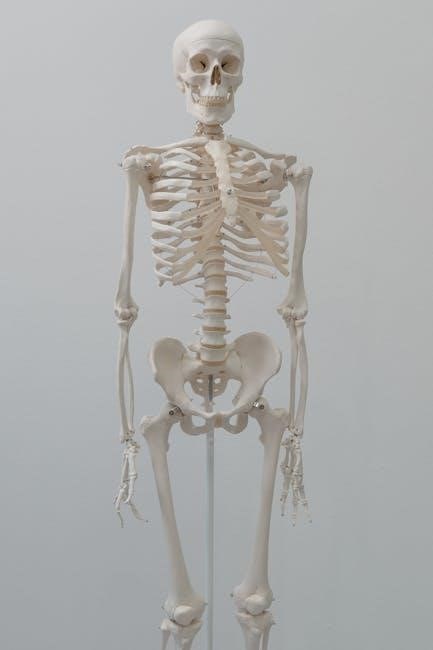
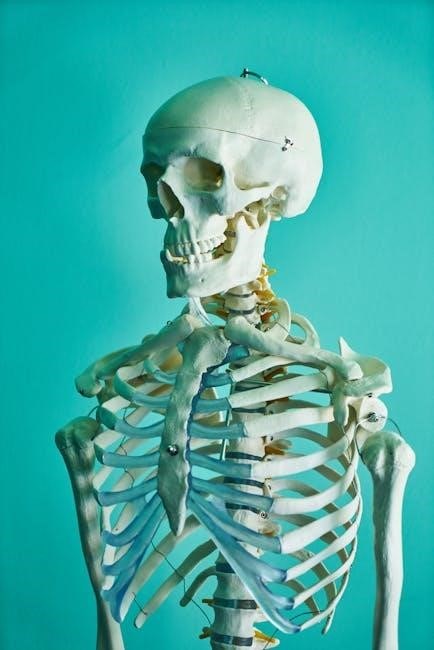
Anatomy & Physiology: An Integrative Approach‚ accessible in PDF format‚ provides a thorough examination of the skeletal system‚ detailing both its structural components and diverse functions․ The textbook meticulously explores bone tissues – compact and spongy – and their microscopic organization‚ including osteons and bone cells․

It clarifies bone development‚ growth‚ and remodeling processes‚ alongside classifications of bone shapes and their corresponding roles․ The PDF resource emphasizes the skeletal system’s contributions to support‚ protection‚ movement‚ mineral storage‚ and blood cell formation․
Furthermore‚ the text illustrates the intricate connections between the skeletal system and other systems‚ like the muscular system for locomotion and the circulatory system for nutrient delivery․ Clinical correlations and detailed diagrams enhance understanding of skeletal disorders and their impact on overall health․
Muscular System: Types and Mechanics
Anatomy & Physiology: An Integrative Approach‚ readily available as a PDF ebook‚ delivers a comprehensive overview of the muscular system‚ detailing its three primary types: skeletal‚ smooth‚ and cardiac muscle․ The text meticulously explains the unique structural and functional characteristics of each muscle type‚ including microscopic anatomy and contractile properties․
It clarifies the mechanisms of muscle contraction‚ from neuromuscular junctions to the sliding filament theory‚ and explores different types of muscle fibers․ The PDF resource emphasizes the muscular system’s role in movement‚ posture‚ heat generation‚ and various physiological processes․
Furthermore‚ the textbook illustrates the interplay between muscles and the skeletal system‚ alongside the nervous system’s control of muscle activity․ Clinical connections and detailed illustrations enhance understanding of muscular disorders and their impact on bodily function․
Nervous System: Organization and Signal Transmission
Anatomy & Physiology: An Integrative Approach‚ accessible as a PDF ebook‚ provides a detailed exploration of the nervous system’s intricate organization and signal transmission mechanisms․ The text systematically covers the central nervous system (brain and spinal cord) and the peripheral nervous system (nerves and ganglia)‚ emphasizing their interconnectedness․
It elucidates the functional roles of neurons and glial cells‚ detailing the generation and propagation of action potentials․ The PDF resource explains synaptic transmission‚ neurotransmitters‚ and the diverse receptors involved in neuronal communication․
Furthermore‚ the textbook explores sensory and motor pathways‚ highlighting how the nervous system integrates information and orchestrates responses․ Clinical correlations and illustrative diagrams enhance comprehension of neurological disorders and their physiological basis․
Central Nervous System (Brain and Spinal Cord)
Anatomy & Physiology: An Integrative Approach‚ readily available as a PDF ebook‚ dedicates significant coverage to the central nervous system – the brain and spinal cord․ The text meticulously details the brain’s regional organization‚ including the cerebrum‚ cerebellum‚ and brainstem‚ outlining their specific functions and interconnections․
It explores cortical areas responsible for sensory perception‚ motor control‚ and higher cognitive processes․ The PDF resource also provides a comprehensive overview of the spinal cord’s structure‚ including its gray and white matter organization‚ and its role in reflex arcs and ascending/descending pathways․
Clinical insights and detailed illustrations within the ebook aid in understanding neurological conditions affecting these vital structures․
Peripheral Nervous System (Nerves and Ganglia)
Anatomy & Physiology: An Integrative Approach‚ accessible in PDF format‚ thoroughly examines the peripheral nervous system (PNS)‚ encompassing all neural structures outside the brain and spinal cord․ The text details the classification of nerves – cranial and spinal – and their respective functions in transmitting sensory and motor information․
It elucidates the organization of peripheral nerves‚ including their structure and the role of Schwann cells․ Ganglia‚ serving as relay stations for nerve signals‚ are also comprehensively covered‚ with explanations of their location and functional significance․
The PDF ebook integrates clinical correlations‚ illustrating how PNS damage manifests as various neurological disorders‚ enhancing understanding of this crucial system․
Endocrine System: Hormones and Regulation
Anatomy & Physiology: An Integrative Approach‚ readily available as a PDF ebook‚ provides a detailed exploration of the endocrine system‚ focusing on hormone function and regulatory mechanisms․ The text meticulously outlines the major endocrine glands – pituitary‚ thyroid‚ adrenal‚ pancreas‚ and gonads – detailing their anatomical locations and hormone production․
It explains hormone classification (steroid‚ protein‚ amine) and their diverse modes of action‚ including receptor binding and cellular effects․ The principles of negative and positive feedback loops governing hormone secretion are thoroughly discussed‚ illustrating how homeostasis is maintained․
The PDF resource also integrates clinical examples‚ demonstrating the consequences of endocrine dysfunction and hormonal imbalances․
Cardiovascular System: Heart‚ Blood Vessels‚ and Circulation
Anatomy & Physiology: An Integrative Approach‚ accessible as a comprehensive PDF ebook‚ delivers an in-depth examination of the cardiovascular system․ It details the anatomy of the heart – chambers‚ valves‚ and associated vessels – alongside a thorough explanation of cardiac physiology‚ including the cardiac cycle and conduction system․
The text meticulously covers blood vessel structure (arteries‚ veins‚ capillaries) and their roles in systemic and pulmonary circulation․ Hemodynamics‚ encompassing blood pressure‚ resistance‚ and flow‚ are explained with clarity․
Furthermore‚ the PDF resource integrates the cardiovascular system with other body systems‚ illustrating its crucial role in maintaining homeostasis and delivering oxygen and nutrients․
Lymphatic System and Immunity
Anatomy & Physiology: An Integrative Approach‚ readily available as a detailed PDF ebook‚ provides a robust exploration of the lymphatic system and its critical role in immunity․ The text elucidates the anatomy of lymphatic vessels‚ tissues (lymph nodes‚ spleen‚ thymus)‚ and their interconnected network throughout the body․
It comprehensively covers both innate and adaptive immune responses‚ detailing the functions of leukocytes‚ antibodies‚ and major histocompatibility complexes․ The PDF resource explains how the lymphatic system facilitates fluid balance‚ fat absorption‚ and immune cell trafficking․
Integration with other systems is emphasized‚ showcasing how immunity defends against pathogens and maintains overall bodily health‚ offering a holistic understanding․
Respiratory System: Gas Exchange
Anatomy & Physiology: An Integrative Approach‚ accessible as a comprehensive PDF ebook‚ meticulously details the respiratory system’s structure and function‚ focusing on the vital process of gas exchange․ The text explores the anatomy of the airways – from the nasal cavity to the alveoli – and the mechanics of breathing‚ including inspiration and expiration․
It thoroughly explains the principles of diffusion‚ partial pressures‚ and the role of hemoglobin in oxygen transport․ The PDF resource clarifies how the respiratory system collaborates with the cardiovascular system to deliver oxygen to tissues and remove carbon dioxide․
Furthermore‚ it integrates regulatory mechanisms ensuring efficient gas exchange‚ vital for cellular respiration and overall homeostasis․
Digestive System: Breakdown and Absorption
Anatomy & Physiology: An Integrative Approach‚ readily available as a detailed PDF ebook‚ provides an in-depth exploration of the digestive system‚ emphasizing both the mechanical and chemical breakdown of food․ The text meticulously outlines the anatomy of the alimentary canal‚ from the mouth to the anus‚ and the accessory organs involved in digestion․
It clarifies the roles of enzymes‚ hormones‚ and peristalsis in the digestive process‚ detailing how carbohydrates‚ proteins‚ and fats are broken down into absorbable units․ The PDF resource highlights the mechanisms of nutrient absorption in the small intestine and the function of the large intestine in water absorption and waste elimination․
Integration with other systems‚ like the circulatory system‚ is also clearly explained․
Urinary System: Waste Removal and Fluid Balance
Anatomy & Physiology: An Integrative Approach‚ accessible as a comprehensive PDF ebook‚ thoroughly examines the urinary system’s crucial role in maintaining homeostasis․ The text details the anatomy of the kidneys‚ ureters‚ bladder‚ and urethra‚ explaining how each component contributes to waste removal and fluid balance․
It elucidates the processes of glomerular filtration‚ tubular reabsorption‚ and tubular secretion‚ highlighting the regulation of blood volume‚ electrolyte concentration‚ and pH․ The PDF resource clarifies the hormonal controls influencing kidney function‚ such as ADH and aldosterone‚ and their impact on urine production․
Furthermore‚ the interconnectedness with the cardiovascular and endocrine systems is emphasized․
Reproductive System: Anatomy and Physiology
Anatomy & Physiology: An Integrative Approach‚ readily available as a detailed PDF ebook‚ provides a comprehensive exploration of both male and female reproductive systems․ The text meticulously outlines the anatomical structures – gonads‚ ducts‚ glands‚ and external genitalia – and their respective functions in gametogenesis and reproduction․
It delves into the hormonal regulation of the reproductive cycle‚ including the interplay of gonadotropin-releasing hormone‚ FSH‚ LH‚ estrogen‚ and testosterone․ The PDF resource clarifies the processes of oogenesis and spermatogenesis‚ fertilization‚ and embryonic development․
The integration with the endocrine system is highlighted‚ demonstrating how hormones orchestrate reproductive events and maintain sexual characteristics․

Specialized Topics & Integrative Processes
Anatomy & Physiology: An Integrative Approach’s PDF version explores advanced topics like the autonomic nervous system and spinal cord function‚ fostering systemic integration․
Autonomic Nervous System: Control of Involuntary Functions
Anatomy & Physiology: An Integrative Approach‚ readily available as a PDF ebook‚ dedicates significant coverage to the autonomic nervous system (ANS)․ This crucial system regulates involuntary functions essential for maintaining homeostasis‚ operating largely outside conscious control․
The textbook details the ANS’s two primary divisions – sympathetic and parasympathetic – explaining their often opposing‚ yet complementary‚ roles in controlling vital processes like heart rate‚ digestion‚ respiration‚ and pupillary response․
Students will explore the anatomical pathways and neurochemical signaling involved‚ understanding how the ANS integrates with other systems to ensure optimal bodily function․ Case studies within the PDF illustrate real-world applications and deepen comprehension of autonomic dysfunctions and their clinical implications․ The integrative approach emphasizes how disruptions impact overall health․
Spinal Cord Anatomy and Function
Anatomy & Physiology: An Integrative Approach‚ accessible in PDF format‚ provides a comprehensive exploration of the spinal cord – a vital component of the central nervous system․ The text meticulously details its anatomical structure‚ including the protective meninges‚ vertebral column relationship‚ and internal organization of gray and white matter․
Students will learn about the spinal nerves‚ their origins‚ and the specific regions of the body they innervate․ Functional aspects‚ such as reflex arcs and ascending/descending tracts responsible for sensory and motor transmission‚ are thoroughly explained․
The PDF resource highlights the spinal cord’s role in coordinating bodily functions and its crucial link to the brain․ Clinical correlations‚ presented within the textbook‚ illustrate the consequences of spinal cord injuries and neurological disorders‚ enhancing understanding through practical application․
Integration of Systems: Case Studies
Anatomy & Physiology: An Integrative Approach‚ readily available as a PDF ebook‚ powerfully demonstrates how body systems collaborate through compelling case studies․ These real-world scenarios move beyond isolated system analysis‚ showcasing the interconnectedness crucial for maintaining homeostasis․
Each case study presents a patient with specific symptoms‚ prompting students to apply their knowledge of anatomy and physiology to diagnose the underlying issue․ The PDF format allows for detailed examination of how disruptions in one system cascade to affect others․
By analyzing these integrated examples‚ students develop critical thinking skills and a holistic understanding of human physiology‚ solidifying their grasp of complex biological processes and preparing them for future healthcare challenges․
Resources and Study Aids
Anatomy & Physiology: An Integrative Approach’s PDF version includes “Integrate: Learning Strategy” boxes and digital resources for enhanced comprehension and effective studying․
“Integrate: Learning Strategy” Boxes
Anatomy & Physiology: An Integrative Approach significantly enhances the learning process through its innovative “Integrate: Learning Strategy” boxes․ These strategically placed features aren’t simply summaries; they offer practical advice and employ everyday analogies to solidify understanding of complex anatomical and physiological concepts․
Designed to actively engage students‚ these boxes provide mnemonic devices and relatable examples‚ fostering better retention of material․ The PDF ebook version makes these learning tools readily accessible‚ allowing students to review and reinforce their knowledge at their own pace․
By connecting abstract ideas to familiar experiences‚ the “Integrate” boxes bridge the gap between theory and application‚ ultimately improving student performance and making the study of anatomy and physiology more approachable and enjoyable․
Digital Resources and Online Platforms
Alongside the printed textbook‚ Anatomy & Physiology: An Integrative Approach offers a robust suite of digital resources‚ readily available with the PDF ebook․ Students benefit from access to online platforms designed to supplement and reinforce learning․ These platforms often include interactive quizzes‚ practice questions‚ and detailed animations illustrating complex physiological processes․
The digital components are crafted to complement the textbook’s content‚ providing a dynamic and engaging learning experience․ Features may include virtual labs‚ allowing for exploration of anatomical structures in a simulated environment․
These online tools enhance comprehension and provide opportunities for self-assessment‚ ultimately supporting student success in mastering the intricacies of anatomy and physiology․
Study Guides and Practice Questions
To aid in mastering the complexities of Anatomy & Physiology: An Integrative Approach‚ comprehensive study guides and a wealth of practice questions are available alongside the PDF ebook․ These resources are specifically designed to reinforce key concepts and assess student understanding․
Expect to find chapter-specific review questions‚ designed to test recall and application of knowledge․ Many editions incorporate “Integrate: Learning Strategy” boxes‚ offering practical advice and analogies for improved memorization․
Furthermore‚ access to online question banks and self-assessment tools allows students to identify areas needing further study․ These materials are invaluable for exam preparation and solidifying a strong foundation in anatomy and physiology․